Friday, March 2, 2018

Reflections on the passing of my childhood hero, Billy Graham


Billy Graham died on February 21st, 2018, months short of his 100th birthday. Russell Moore, President of the Southern Baptist Convention, called him the most influential evangelist since Apostle Paul. He preached the gospel to over 215 million people across 190 countries. The Billy Graham Evangelistic Association claims that “throughout his life, Billy Graham preached the gospel of Jesus Christ to some 215 million people who attended one of his more than 400 crusades, simulcasts and evangelistic rallies in more than 185 countries and territories. He reached millions more through TV, video, film, the internet and 34 books.”


I remember my dad saying when I was a kid that only 2 people in the world could have their mail delivered to them without their addresses - the President of the United States and Billy Graham. Clearly, no one person has ever had the kind of globe-spanning reach that Billy Graham did. I’ve listened to several Billy Graham sermons on the TV, growing up, and the most compelling part of his crusade was his invitation to people to receive Christ, and his team singing ‘Just as I am without a plea’, as thousands flocked to the front of the stage.


He also came to India and conducted crusades in Bombay, Madras, Delhi and Nagaland. He preached his message to the Nagas who used to be head-hunters, but had turned to Christ when Christian missionaries brought them the gospel of forgiveness and repentance. In a different city, he recounts weeping as he witnessed a cremation where a young man pierced his father’s skull to ‘release his spirit’. 


What makes Billy Graham especially remarkable was the undiluted purity of his message. He did not muddle it with fluff or affectation. Even in his very last crusade in 2005 held in New York he proclaimed “I have one message: that Jesus Christ came, he died on a cross, he rose again, and he asked us to repent of our sins and receive him by faith as Lord and Savior, and if we do, we have forgiveness of all of our sins.” An urgency to drive people toward Christ and away from judgment, delivered with clarity and compassion. His book, Peace with God, which I read in my teens, still remains, in my opinion, one of the best crystallizations of the Gospel, and apart from the Bible, the best gift to someone trying to understand God and His purpose. 


One of my most poignant memories of Graham is when he comforted the nation after the 9/11 attacks  on the World Trade Centre and the Pentagon. He was a spiritual counselor to Presidents since Dwight Eisenhower, right up to the current POTUS, Donald Trump. He steered clear of partisan politics and instead focused on giving Presidents spiritual advice from the Bible. His body was brought to the United States Capitol for the public to pay respects, making him only the 4th civilian in US history to be accorded such an honor. On his funeral today, in his home state of North Carolina, the gospel was preached under a tent to commemorate his revival meetings - just as in life, even in death, the name of his Lord and Savior was glorified. 


Only at his death, did I grasp the import of his ministry. He was a staunch opponent of segregation. He insisted at his rallies that the ropes separating whites and blacks be removed. This is at a time when denouncing racism was not popular, and even before the US Supreme Court banned racial discrimination. He refused to speak in South Africa to segregated audiences, and went there only after integration occurred. In a meeting in Johannesburg in 1973, Graham said, “Christ belongs to all people. He belongs to the whole world.…I reject any creed based on hate…Christianity is not a white man’s religion, and don’t let anybody ever tell you that it’s white or black.”


Billy Graham was a close friend of Dr Martin Luther King’s and bailed him from jail. Although people forget today, MLK Jr was Reverend Martin Luther King Jr. and central to his peaceful agitation was that racism was a sin in God’s sight for human beings created in the image of God. 


It’s also heartening to read that all of Graham’s 5 children and several grand children are firmly rooted in the ministry today. There were personal failures and struggles with faith that several of them experienced, but God was faithful in answering the tearful prayers of their parents, Ruth and Billy Graham and honoring the godly example they set for their children. It’s a testament to the power and influence that righteous parents wield over the lives of their children. 


Lastly, no tribute to Billy Graham is complete without an ode to his humility. Unlike the title-hoarding common today, he did not like being referred to as ‘Doctor’ since it was an honorary degree, and he hadn’t earned it at an institute. The best witnesses of a man’s character are his spouse and children, and his testify that the Billy Graham who thundered from a pulpit, was the same person they saw at home, a gentle and loving father - wholeheartedly devoted to Christ, passionately loving to his wife, a role model to his children, and unflinching until his last breath to the cause much greater than him. An era came to a close with his death. He's said to have been planning his funeral in advance, so that the Gospel would be heard by many - fittingly a leading newspaper put it as ‘Billy Graham Holds One Last Crusade – His Funeral’. 


Thursday, January 25, 2018

India’s deathly dance with intolerance

I read an op-ed on Quint (an Indian publication) this morning, titled ‘Why India should not forget the murder of Graham Staines'. Staines was an Australian missionary who was burnt to death by a mob in Manoharpur, Orissa, along with his 2 sons, 7-year old Phillips and 10-year old Timothy. The mob was led by Dara Singh, with links to the Bajrang Dal, a fringe political outfit known for inciting communal violence. Their crime was leaving the comforts of their native land, and making India their home, among the most disenfranchised in society. The Staines family had opened a leprosy home among adivasis, literally washing the sores of those rejected by their own communities. The event sent shock waves throughout the country, and awakened Christians to the fragility of the much-touted fabric of co-existence. 

India has been for the longest time, proud of being a secular democracy, and most leaders of repute have at least paid strong lip service to the values of tolerance and the right to practice and propagate religion, without threats or interference from the government. For the first time, in a long time, things are changing with rapid intensity. 

I was born and raised in Mumbai, and as a first in my memory, saw a policeman posted outside my church on Christmas. There has been a ferocious increase in the crimes against minorities, including Muslims, since then. Muslims, who have had a far more tenuous history with co-existence in India, have been beaten to a pulp, or brutally killed for the mere offense of consuming or storing beef. On occasion, the meat did not even turn out to be beef. 

Of late, crosses are being torn out, churches vandalized, and pastors beaten. What used to happen in the cover of dark, now happens brazenly in daylight. The nefarious elements of society have come crawling out of the woodwork, emboldened by the blatant and unapologetic Hindutva agenda of the BJP government that’s in power. The Prime Minister is deafeningly silent on violence against Christians and does not use the power of his office to dissuade the same group of people who are also his vocal and staunch supporters. 

I wish I could say my countrymen are outraged and are demanding answers from their elected leaders. Apart from the minority commission, and a few opinion pieces, there are no booming voices. I listened with shock as a colleague dismissed reports of persecution against Christians, as being overblown and not a big deal in reality. People have a right to their own opinions, they even have a right to their own prejudices, but not to their own facts. When we can’t even operate from a baseline of truth, reasoned engagement is no longer possible. 

A recent report described the plight of a group of people thrown in jail in Madhya Pradesh who only crime was to go out caroling on Christmas night. According to Open Doors’ World Watchlist, released in January 2018, India now ranks 11th in the world among countries where Christians face extreme persecution, faring only better than Iran. Those sharing the ignominy? Such luminaries as North Korea, Afghanistan, Pakistan, Iraq and Yemen. It is a tragic blot on the country’s reputation, a travesty of our legacy, and yet nobody from the political class is bemoaning the sordid state of affairs. In 4 short years, persecution has become par for the course. 


As Indians, we must realize that a government that stands for and protects the rights of minorities, will also be in the best interest of the majority. Nations elect leaders who are a reflection of their values. We didn’t rail against the government when they encroached on press freedom, individual liberties, on the right to peaceful protests, or even the basic right to eat what we please. 
So now, our nation has ended up getting the leaders we deserve. 

#Quint #Persecution #India #Christians #Minoritycommission #OpenDoorsWorldWatchlist

Wednesday, January 10, 2018

Your favorite TV show could reveal a lot about you

I have never been a fan of television. I’ve preferred books, always. The TV shows I’ve enjoyed usually have an information-rich quality to them. 

Recently, in the Netflix age, I began binge-watching ‘Bones’. It’s a series with a brilliant forensic anthropologist as its lead. She’s the foremost expert in the world in her field, and she knows it. She is teamed up with an empathetic FBI agent, and together they solve perplexing crimes. Rallied to the cause, is a group of super nerds, equipped with state-of-the art technology in the Jeffersonian, a prestigious Washington D.C. medico-legal laboratory. There’s a nerdy botanist/chemist/entomologist, a talented artist cum computer savant, an impressive coroner, and a freakishly smart group of interns. 

Each episode pays spectacular attention to detail, each frame is rich with specifics, and the 40 minutes are held in a taut, fast-paced narrative. You come out of each episode appreciative of the realism that is conveyed, even when the events seem bizarre and often feature chilling murders, and grotesque criminals. 

Through all this, there is a back story to each of the lead characters. It plays out naturally, like the white noise from an air conditioner, without too many jarring peaks or troughs. It does depict tragedy, heartache, devastation, pain and loss, true to portraying real life, but it does not overpower the scientific temper of the show, nor its tight focus on the interplay between the skills of the characters. 

#Bones ran for 12 seasons, a rare feat for a series. When I finished the last episode, it was as if I lost a friend. 

Image result for bones booth and brennan

In comparison, Grey’s Anatomy similarly, had a really long run. I began watching it a few years ago, in anticipation of the medical theme of the show. I liked all things Biology and felt drawn to the terminology, the techniques, the discussions. But a few seasons in, the medicine took a backseat to the personal drama of the characters. In a few short seasons, characters were routinely dying, being killed, thrown out of airplanes, involved in mass shootings, without any signs of catching a break. In other words, it became too Shonda Rhimesy. I let go. 

Obviously, I’m not suggesting one’s choice of a TV show can be used to draw up a psychological profile. But it got me thinking as to why I enjoyed one show and discarded the other, which was a far bigger commercial hit, with more characters becoming pop culture references. 


Maybe it says something about me. A preference for logic, analysis, realism, and an impatience with melodrama, pulp, and incredulity. Maybe my conclusions are flawed. 

                                                                                              #popculture #psychology

Tuesday, January 2, 2018

Unsocial media: The stranglehold of the modern feedback loop

I was blown away by the recent comments made by Chamath Palihapitiya, a former Facebook executive, expressing guilt over his contribution to the impact of social media on society. It’s rare for an insider, particularly a wealthy beneficiary of the product he helped turn into a giant, to reflect on how it’s changed human dynamics for the worse. 

Prior to him, other notable names have come out and ‘revealed’ what many of us instinctively understood - the dopamine rush we experience from receiving feedback when we share moments of our lives online. Humans thrive on the approbation of their fellow beings. It has always been that way, except now, we seek more and more stimuli not only from friends and family, but from the world at large. Social media understands our psychology and exploits it. 

This came home to me, when I came across an explanation for how Twitter has us hooked. When I log into Twitter, the first thing I notice, is the notification icon, which shows how many people have liked or retweeted my content. There was always a slight lag in the popping up of the number of notifications. I made nothing of it. Turns out, the lag is completely intentional and not a glitch that needs a fix. Twitter keeps you tentacled and eagerly expectant as you wait for notifications to show up, not unlike addiction to substances. 

Image result for twitter notifications icon

No one is immune from the effects of using social media, since we are wired to desire physiological rewards like the dopamine release. Even realizing the harm that excessive exposure brings, does not do us much good, since we do not want to risk being isolated from a world where more and more transactions, commercial or social are conducted online. 

I wanted to set a day apart this week to reflect and mediate, but grew restless and began reaching automatically for my phone. It’s simply the default response now to an idle minute - mindlessly checking content on the phone. 

I believe I’m a measured and controlled user of social media - I resist the urge to post more than the occasional picture, and thus feel relatively insulated from the desire to check the number of thumbs and hearts and smiles and comments. Detachment should have come easier to me, yet, I found myself reaching for the phone.

I posit that our online habits have a real effect on our real-world behavior. I’ve seen parents create social media accounts for their babies, with glowing pride, recklessly chaining their children to their own false sense of worth. Far too many are obsessed with presenting a rose-tinted view of their lives, triggered by wistfully gazing at others’ filtered images, commingling reality with delusion.  

It’s easy for anyone with a smartphone to catapult to 15 minutes of fame, so we all feel like we deserve a shot. The anonymity of the internet allows us to give free rein to our worst instincts, its reach makes pundits out of couch dwellers, its filters allow us to brush out scars and defects.

Broken homes, shattered dreams, pained hearts, and spurned hopes do not make for good uploads. So, every once in a while, just disconnect. Get off the grid. Stop building your identity through your online persona. Don’t be bowled over by the sepia posts of your friends and co-workers. Strive to be firmly grounded and deeply rooted to reality.  

Enjoy the benefits of social media with a loose hand. When you do, it cannot get a grip on you. 

Don’t let’s confuse hashtags with happiness. 

Friday, December 8, 2017

Jerusalem 101: Making sense of the evangelical passion for Israel.

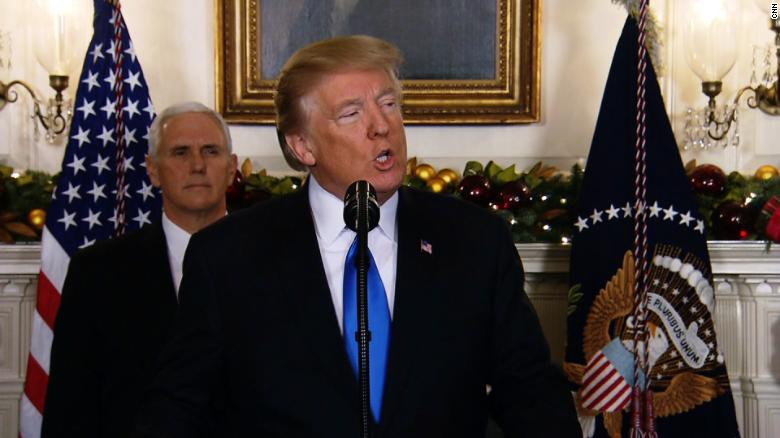
On Dec 6th 2017, President Donald Trump made a historic announcement by recognizing Jerusalem as the capital of Israel, and intending to move the US embassy from Tel Aviv to Jerusalem. It has been compared in its significance to Israel being declared as a state in 1948. The United States was the first country to recognize Israel as a state on May 14th, 1948, under the leadership of President Harry Truman. Then as now, the President did so despite opposition from parts of his administration including the Secretary of State, and ally nations. 


Not many truly understand why evangelical Christians feel so strongly about the right of Jews to a Jewish state. Liberal host at MSNBC, Chris Mathews is a surprising example of this ignorance. He stated that Christians support Israel based on a 'mythical' belief that if Jews are all back in Israel, the second coming of Christ will be triggered. Unlike Islamic theology, Christian thought does not assign a role to Christians in forcing the hand of God to accelerate the second coming of the Messiah. The Bible says it is not for us to know the time or the hour. And God certainly does not need a helping hand when setting times and dates. 

As Apostle Paul explains, the church is grafted into the tree that had Israel as its natural branches. This vivid imagery is supposed to explain that Gentiles have been made partakers of the promises that God made to Israel. On this basis, Gentile Christians feel a kinship with Israel. They also understand that God is not done with Israel and His covenant with ethnic Israel will be fulfilled. 

The Old Testament assures readers that in the last days, there will be a regathering of the Jewish people to Israel. There are several Biblical prophecies that describe the efforts to dispossess Jews of their land, of their enemies’ determination to annihilate them, and how finally God Himself in the midst of all nations, comes to their rescue. 

In the centre of this divine series of events, is a tiny plot of land, in a nation the size of New Jersey. Revered by all 3 monotheistic religions, Christianity, Judaism, and Islam, this piece of real estate, is a perennial tinderbox. One of the oldest cities in the world, Jerusalem has been attacked, besieged, destroyed and then rebuilt multiple times. King David established Jerusalem as the capital of Israel and his son Solomon built the first temple there. In AD 70, Jerusalem and the second temple were destroyed by the Romans, Jews were exiled from their land, and were scattered to the ends of the earth, again, in fulfillment of Bible prophecy. Since then, Jews have yearned to return to their homeland, capturing that longing at the end of every Passover seder, with the traditional phrase, “next year in Jerusalem”. 

The fact is President Trump did nothing more than acknowledge a historical reality - Jerusalem has always been the capital of Israel. Under Israeli administration, lies the best hope for Muslims, Christians and Jews to worship freely and unhindered. Yet ironically, Jews are not allowed to pray on the temple mount, where the Al-Aqsa mosque now stands, despite having historical claim to that ground. Jews only have access to the wailing wall, believed to be the Western wall of the second Jewish temple, which was undertaken as a massive building project by King Herod before the dawn of the first century AD.

Arabs enjoy more freedom, personal liberties and opportunities for education, advancement and material success in Israel, than anywhere else in the Middle East. They occupy positions of power in the Knesset, the Supreme Court, and are employed as doctors, teachers and lawyers, owing to the secular and democratic fabric of Israeli society. It is not only accurate to strike off the contention around Jerusalem as the Israeli capital, but also righteous. 

Jerusalem is poised to become the prophesied 'cup of trembling', 'the burdensome stone', setting the stage for all nations gathering against it. The evangelical affiliation toward Israel is knit together by an appreciation of the historical claims of the Jews, the understanding that the free exercise of all religions is made possible by Israel’s democratic foundation, and the knowledge that compassion for Palestinians is best extended through support for an Israel that respects and protects their human rights, even at great cost to themselves. 

#Israel #DonaldTrump #WailingWall #TempleMount #Jerusalem 

Friday, November 10, 2017

I’ve decided to write more often.

I have been a very infrequent writer. My blog lies dormant for a good part of the year and only sees sporadic activity. Over the years, friends and readers have encouraged me to write more often. I have held back for several reasons, primary of which was the desire to treat my blog as a journal of personal reflections, unintended for public consumption. I was always surprised when someone told me they read and liked a particular post. 

But as I was going through some of my older posts on this blog, I read a comment by someone who noticed that I wasn’t writing as often and was appreciative of helping them discover the music of an artist I deeply admired (no prizes for guessing who I’m talking about). I received a handful of other messages on similar lines. 

I got to thinking that if my reflections, personal as they might be, can help someone at a juncture in their lives, or even merely resonate with them, at a single point in their day, it’s a meaningful difference I can make, that I do not want to miss out on. I do not overestimate my meagre abilities in any way, but it would do no good for me in hiding them, and bring no glory to my Creator in suppressing them. 


So, I’d like to talk more. Share more. And perhaps, influence more. 

Saturday, September 23, 2017

Another conversation - Is Your Soul Getting Chipped Away?


I talk about what I'm reading at the moment, the recent death of Christian apologist, Nabeel Qureshi, the kind of church I think one should be a part of, and well...wanting some lightning and thunder.

Thank you, Ps. Priji.

Is Your Soul Getting Chipped Away?


Tuesday, August 22, 2017

To be or not to be: A Bible prophecy buff

We come across two extremes in Christendom today with regard to the subject of Bible prophecy. 

One approach ignores it altogether, deeming prophecy irrelevant to modern life as a Christian. The other overemphasizes it, to the point where more fundamental doctrines are forgotten and prophetic timelines play an outsized importance in all discussions.

Neither represent the mindset of believers in the New Testament churches.

I can’t open YouTube without yet another video announcing the impending Gog-Magog war. It’s almost as if a group of believers think that merely by stoking feverish interest, the second coming of Christ will be expedited. As if God the Father would determine the best time for his Son to re-enter history, this time as Judge and Avenger, blazing with glory and power, based on the sum total of views, likes and shares. Conspiracy theorists vie to come out with startling pronouncements. The title of their videos are pure click-bait, too often suspensefuly unveiling the name of the antichrist and the exact date of his return. The variety of positions is staggering, ranging not only from the traditional camps of pre-tribulation vs post-tribulation rapture, but to several devious offshoots with zero Biblical grounding, such as the so-called ‘blood moons theory’.

Recently, the self-proclaimed doomsday prophets went into overdrive, after the July 2017 attacks on Israeli policemen on the temple mount in Jerusalem. Several theorists heralded the coming of Christ, as an imminent occurrence. They proclaimed that the building blocks of the third Jewish temple were being laid, even as the video was buffering.


This is certainly not to say that these aren’t fascinating times to live in, especially for believing Christians awaiting the return of their Lord and Savior. We do seem to be hurtling toward the fulfilment of several Old and New Testament prophecies.

Ever since the creation of an independent state of Israel for the Jewish people on May 14, 1948 – events have seemed to occur at a rapid pace. The prophet Isaiah proclaimed Who has ever heard of such things? Who has ever seen things like this? Can a country be born in a day or a nation be brought forth in a moment? Yet no sooner is Zion in labor than she gives birth to her children”.

After nearly 2000 years, God gathered his people, the Jews, and brought them back to their homeland in Palestine. He kept His promise. It took a long time coming, but it wasn’t a moment late. That event was a linchpin for a build-up of tensions around the world, and particularly in the Middle East.


On the other end of the spectrum, is a dangerously foolish disregard for God’s prophetic calendar. Several mega churches do not teach prophecy from the pulpit; others like Rick Warren have branded it a distraction. This egregious error lulls Christians into a naïve sense of well-being, content to believe that God’s entire agenda is to prosper them on this earth. Another unbiblical teaching within certain Charismatic churches, is the Kingdom Now theology, which promulgates that God’s kingdom and His control will be re-established here on earth through His reliance on a special group of believers. They deny that the rapture of believers will occur. They adopt an activist stance toward the problems of this world, seek to overrun social and governmental institutions, and oppose separation between church and state.


In this context, it is indeed right to ask if there is a balance that can be struck between expecting the world to burst into flames at any moment, and a wilful ignorance of the abundance of prophecies in the Bible, and taught by Christ to His disciples.


Yes, the world is a tinderbox, ready to ignite violently at the flaring provocations among nations.

Yes, the stage is being set for a new world order, and people are looking for a persuasive deliverer to usher in peace.

But no -  Christians do not need a hard-line stance on times, dates and hours. 

They do not need to be militant in defending their view of the rapture and the second coming of Christ, when the Bible is not explicit about the sequence of several events and their time-frames.

They do however, need to be vigilant, and with sanctified wisdom rightly search the Scriptures and interpret the signs of the times. Jesus implored his disciples to learn this lesson from the fig tree – As soon as its branches become tender and sprout leaves, you know that summer is near. So also, when you see all these things, you know that He is near, right at the door”

We should be active in good works, prompt in repentance, and alert as we prepare ourselves for the persecution that surely lies ahead.


God has indeed appointed individual believers and His church, to act as the preservative to societal decay, the salve for hardened eyes, and the balm for aching souls. 

Even as we stand ready to shed blood, sweat and tears in the service of our servant Leader, it’s important to be assured of this truth - this world is never going to know real peace, until the Prince of peace returns. 

Tuesday, August 1, 2017

The voice of the broken

This last month, I was shocked at the news of the passing of Chester Charles Bennington, the frontman for Linkin Park. I’m usually not taken aback by celebrity deaths, since I am too removed from the entertainment scene to feel a connection either to the lifestyle or its inhabitants. This however, was different. I felt sick and shaken, especially because he committed suicide. He hung himself in his home.

Linkin Park released their debut album in 2000. I first heard of them and came across ‘Hybrid Theory’ when I was in junior college, at age 16. The album was a huge commercial success but I never would have guessed this was the band’s debut effort. The lead singer was a skinny, bespectacled, bejeweled, earnest looking guy, with one of the most unique voices ever.


When I was in college, kids branded themselves metal-heads and considered the mosh-pit as an exclusive club, entry into which was determined by the heaviness of the rock bands one was ‘influenced by’. I never quite understood the tribalism of college kids and found myself swimming against the tide, in more respects than one.  

When I first listened to the Hybrid Theory cassette – yes, a cassette. CDs were just becoming popular and not everyone had a CD player - they seemed to me to be yet another band seeking popularity based on manufactured angst. As I went down the playlist, I was fascinated by the unusual combination of lyrical depth, melodic composition, and vocal firepower. Chester’s range was incredible – from low whispers, to soulful croons to feral screams. His heart was truly in it, in the fullest sense of the term.

I enjoyed their next album as well, Meteora. ‘Crawling’, ‘Numb’ and ‘In the End’ became increasingly popular and went on to become their most recognized songs. Although I liked the popular numbers, my preferred songs were the lesser known ones like ‘This is my December’. The lyrics were heartfelt and moving -

“And I'd give it all away
Just to have somewhere
To go to
Give it all away
To have someone
To come home to”

Chester would have been in his early thirties, when his star was rising in the 2000s. At that time, I had no idea of Chester Bennington’s personal story. Not even the vaguest idea about his searing pain, his unrelenting heartache and the demons he fought on a daily basis.  I read his biography only after his death, and then, many of the haunting lyrics he had penned, came flooding back and made awful sense.


After college, I moved on from Linkin Park, and save for some singles like ‘What I’ve done’ largely lost touch with their work. ‘What I’ve done’ was striking, with lyrics drenched in despair but lurching toward hope. Much like he was trying to find God, he sang “let mercy come and wash away what I've done". 

In the end, though, he gave in to the demons who vied for his life. Through his life, with gut-wrenching frequency, he felt like giving up, throwing in the towel and severing the last thread of sanity he was hanging on to. Always inching one step closer to the edge. In the land of the living, death stalked him unremittingly -

“I'll face myself to cross out what I've become
Erase myself
And let go of what I've done”    


#chesterbennington #linkinpark #hybridtheory #meteora


Saturday, July 29, 2017

The curious case of the handsome Jesus

I recently finished watching A.D. Kingdom and Empire. It’s a fascinating, fast-paced mini-series on the events that occurred after the death and resurrection of Jesus. Over 12 episodes, the viewer is taken through the experiences of the disciples, the birth of the early Christian church, the spread of Christianity, and looms over the events that led to the eventual destruction of Jerusalem in AD 70.

It depicts the escalating tensions between the early followers of Jesus and the religious system of the day, in a gripping style. It does take liberties to fill in gaps between the chapters of the Gospels, and in some instances, does not portray Biblical incidents in true context. That being said, it is eminently watchable and will rouse a desire to better understand the roots of the early Christian church.

The series is produced by Roma Downey and Mark Burnett, who also produced the Bible mini-series telecast on the History channel, and the movie ‘Son of God’.

As a kid, I enjoyed watching movies on the life of Jesus and have fond memories of viewing them with my family. Those were early years; I continued watching the newer movies made on Jesus and happily, never grew tired of them.

A strange trend emerged as Hollywood decided on a bigger say in the genre – the appearances of the men cast for the role of Jesus grew more and more striking. 

From the sculpted Jim Caviezel, to the traffic-stopping Diogo Morgado, 
to the blinding Juan Pablo di Pace.


As a child, I used to wonder why the Bible did not include a more detailed description of Jesus’ physical qualities. If the Bible described how tall he was, what the color of his eyes were, what his build was like, wouldn’t that put all speculation to rest? Now we have people molding Jesus per their own imaginations. Some claim he was white, some black, and some brown.

On the other hand, there’s also the most common picture of Jesus we’ve all seen. Almost universally, Jesus is shown as a light-skinned, lean man, with flowing robes, holding a lamb serenely and looking forlorn with a halo around his head. Where did that image come from? At some point, we created a sissified Jesus (as Voddie Baucham puts it), who looks like an ethereal supermodel, with silky smooth shampooed hair, manicured hands which haven’t seen a day’s work and feet softened from walking on roses.

Years later, in a moment of clarity, I realized why the Bible was silent about Jesus’ physical attributes. In stark contrast to His portrayals, the Bible leads us to believe that the historical Jesus was actually plain-looking and unremarkable, as stated by Isaiah – “He had no beauty or majesty to attract us to him, nothing in his appearance that we should desire him.” Yet, we think of Him as a pinnacle of male attractiveness in all our depictions and imaginations of Him.

Imagine how many mothers would have desired the perfect baby, how many men would have chased the ideal look, and how many women would have pursued the textbook man, in their quest to look like, or be with, a reflection of Jesus.  


That Jesus was “despised and rejected by men, a man of sorrows, and familiar with suffering’ is glossed over or completely forgotten. The Holy Spirit was intentional in allowing minimal details of Jesus’ appearance in the Bible, since He is never meant to be the standard of beauty, but instead the model for character and godliness, for life on earth. As the Bible makes abundantly clear, man looks at the outward appearance, but God looks at the heart.

There are no accidents or oversights in the Bible – we ought to recognize and absorb the gravity of the simple truth behind the silence of Jesus’ appearance. It will also open our eyes to other realities – First, looking beyond people’s external appearance and valuing them as fellow beings made in the image of God, with intrinsic worth. And second, having a renewed understanding of beauty – by discarding the chase to look younger, lighter, or shinier, and instead cultivating the authentic beauty of character, virtue and a gentle spirit.